Stocking A Clean Eating Pantry
This post may contain affiliate links. If you make a purchase through links on this site, I may earn a commission.
Read my Privacy Policy.
Stocking a clean eating pantry has never been easier! This guide makes is super easy. Give it a try!
One of the problems I had when I started eating clean was my incredibly, junk-food-filled pantry. There was just nothing I didn’t have in there! From candy bars, to white rice and pasta, I had it! Far from the modeling “diet” I followed in my teens.
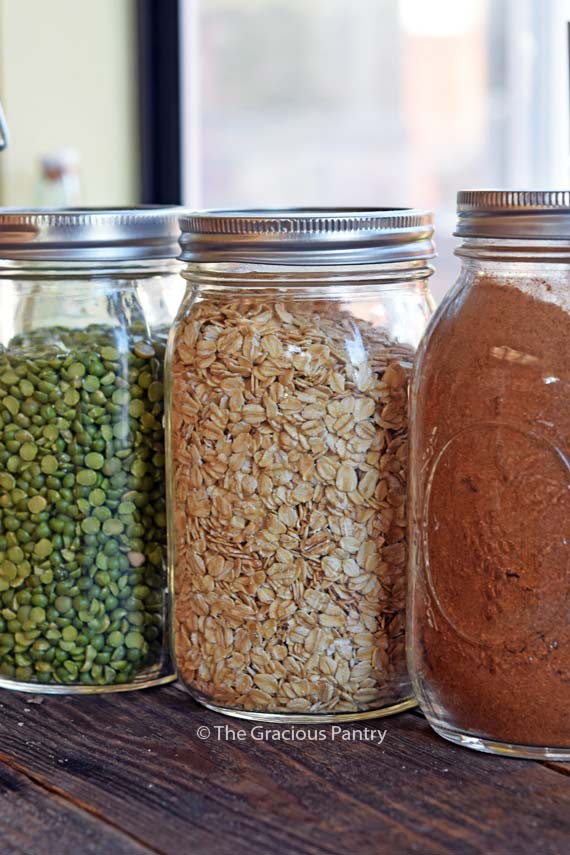
Now I admit, I didn’t go through and toss everything so I could start from scratch in one day. Switching my pantry contents to 100% clean foods was a challenge, and I just didn’t have the money to start from scratch all at once. So what did I do?
Every week, I chose one food to replace. Out went the candy bars and in came the protein bars. In a few months, my pantry was…. perfect!
So what clean foods should you buy to replace what’s in your pantry now?
RELATED READING:

Stocking A Clean Eating Pantry
Whole What?
Whole Wheat Pastry Flour is easily substituted in most recipes calling for white flour. It’s cheapest to purchase it in bulk at your local health food store. (You’ll need to find another alternative if you are gluten sensitive). As far as I know, this is the finest “grind” of whole wheat flour you can buy.
Beans, beans the magical fruit. The more you eat the more you…
Whether you like them canned or cooked from scratch at home, be sure you have plenty of these on hand in a broad variety. They are nutrition powerhouses and are very easy on the wallet. Just be sure to read labels if you are buying canned beans. Many will have added sugar. Avoid these. The sugar is not necessary or part of a clean eating lifestyle. Some beans to try:
- Garbanzo beans (chickpeas)
- Black beans
- Kidney beans
- Pinto beans
- Adzuki beans
- Navy beans
The Wonderful World of Grains
If you’ve only ever heard of wheat, oats and rice, you’re not alone. Many people don’t even realize the incredible list of healthy grains available to them. Long gone are the days when we had to make due with a few simple and well known grains. Today we have a veritable cornucopia of nutritious grains at our disposal. Here are just a few to get you started:
- Quinoa
- Brown Rice
- Barley
- Millet
- Farro
- Amaranth
- Buckwheat
- Kamut
- Oats – Steel cut is best
Moooooove Over Dairy!
If you are sensitive to dairy like I am, you have some fantastic alternatives available to you!
- Almond milk (Unsweetened)
- Rice milk (Unsweetened)
- Hemp milk (Unsweetened)
- Hazelnut milk (Unsweetened)
- Coconut milk (Unsweetened – usually canned)
Maybe The Squirrels Have It Right!
Nuts are wondrous little doo-dads and are a great addition to your eating plan in small amounts. The nutrients found in nuts are unequaled, and they really add a flavorful punch to anything you add them to. Some nuts to get you started are:
- Almonds – nothing added.
- Hazelnuts
- Walnuts
- Pecans
Do You Have A Sweet Tooth?
There are actually quite a few sweeteners allowed on a clean eating plan. In moderation, you can enjoy some sweet treats on a semi-regular basis!
- Honey
- Sucanat
- Maple syrup
- Brown rice syrup
- Stevia, liquid variety
Extras
Some extras you should always have on hand are:
- Chia Seeds
- Flax Seed Meal
- Oat bran
- Wheat germ
- Bee pollen
So there you have it. It’s by no means a complete list, but it’s a place to start. When you go grocery shopping, just add fresh fruits and veggies to this list and you’ll be well on your way to better health!
This article is an original work and is © Tiffany McCauley. It may not be reproduced for any reason without the written permission of the author.
Hey!
This is awesome! I am trying to lose the last 20 lbs of my baby weight from my 1st pregnancy and believe Clean eating is the way to go! I love your site and all the helpful links for beginners. I do have one question though, my husband LOVES cereal. What should we replace it with or is there a clean cereal for us to use?
Thanks so much!
L
Leigh – The only one I know of (and I’m not totally sure if it’s 100% clean), are something called “puffed grains”. You can find them at health food stores and the only thing in them is the grain itself. It’s not like regular cereal and it gets mushy fast. But it’s the only one I know of and they come in all different grains. If you can’t find them locally, amazon.com has them. Hope that helps. 🙂
I am finding it do difficult to go clean, we have a family of six( I know others do to and more) however the are all under 8 and we like everyone else are very busy ith their sports and choosing. I try to make all our baked goods and things from scratch and as much more as possible, however it’s things like condiments that I struggle with the most, saying that we make all our own salad dressings and only eat ketchup and mustard…..this is a great start to our journey…..thank you or the inspiration I think we just need to find tune and tweak what we are already doing…..onto to fixing the pantry ( which lucky for me my husband just built me one that is 15 feet wide floor to ceiling but only 8″ deeps so nothing gets lost or spoiled. 🙂
Allison – Sounds like you’re on the right track! And oh, you lucky girl!! What I wouldn’t give for a real pantry!!
Hi Tiffany! I am trying to go all the way with my pantry now and clean foods. There are a few things I just can’t find in a clean form though. Could you give me suggestions, the biggest is Tortillas. All the whole wheat tortillas I’ve found contain tons of chemicals. Mayo or a close substitute, any ideas? Any clean condiments in that case? Which dark chocolate do you suggest? I know this is a lot of questions, thanks for being so available!
Ashley – Let’s start with what stores you have available to you. That will make a difference. Do you have a Trader Joe’s? Whole Foods?
I wish, I live in small town in N. Iowa. We have an awesome Hyvee, Walmart, Target, and a great health food store that will order special items for you if you have an item name.
Ashley – It’s hard to say when I don’t know those stores. Would it help if I gave you amazon links?
What about soy milk?
Renny – I don’t use soy milk any longer. I did in the beginning, but I’ve read too much negative stuff about it. Of course, it’s a personal choice. I’m not saying others shouldn’t use it, but my choice is to avoid it these day.s
Hi Tiffany! I just stumbled onto your website through pinterest and really love it. Not to mention how friendly and inquisitive everyone is, I really enjoy reading everyone’s posts.
I tried to go vegan in January and was successful for 6 months, I loved how I felt but I was having a difficult time in the evening having to make 2 separate dinners for my daughters. They actually LOVED the vegan dishes but my oldest one (Trinity is 10yrs old) has a genetic disease called Cystic Fibrosis which affects her lungs & pancreas. Her doctor was very concerned with her eating a vegan diet. Trinity’s lungs are fantastic but she has a very very difficult time gaining weight and had a g-tube put in last summer for additional night feedings to help with receiving extra calories. She is finally starting to gain weight and is functioning at normal energy levels…YEAH!
I have always been a big health nut and have had a hard time understanding how to provide Trinity with the high fat, high sodium diet she needs to grow while staying in a clean/healthy diet. I believe it is possible, but am not sure how to go about it.
Jamie – The only thing I can think of is that you plan your meals around hers. Maybe add to them somehow for yourself?
is there anything wrong with soy milk ? I’ve noticed not many people drink it. I am lactose intolerant and just recently starting looking for alternatives. Should I try something other than soy milk ?
Suzie – Some people drink it, but many avoid it for several reasons. Firstly, it’s difficult to find soy milk that is non-GMO (genetically modified) and second, soy tends to mess with hormone levels, or so I’ve read.
My understanding, is that distilled water is really bad for your body-the ph in our bodies is of utmost importance and should be about 7, too far in one direction or another can cause serious harm, it’s based on alkaline vs acid. My friend (who used to sell distillers) now sells water filters and did the whole demo for me(it’s like when you use a pool testing kit) I can’t afford the filter but I learned a lot about the importance of ph in our bodies, really important if you get UTI’s or are sick. Distilled water is far from the ideal on the ph scale.
Cally – I really feel distilled water is the least of our worries. We can pick a lot of things apart, anything really. Water, fruit, vegetables… I don’t feel that’s the real issue. But that’s just my personal opinion. Do what works best for you!
About the sweeteners you mentioned- I saw that stevia is mentioned, but not the similar products like Truvia (powdered stevia), Trulicious, etc. Also what about Sugar in the Raw (turbinado sugar, isn’t it?)? Are those things okay? If not, why? Thanks!
Ashely – I’m still researching sugars and will be doing a blog post on the various types soon. So I can’t answer right now about the turbinado or raw sugar. But I will. As for Truvia vs stevia… stevia with nothing else added is just that. Stevia. The plant. Truvia is made by the coca cola company. It’s very processed and has some other nasty thing added to it.
Had a question about two things. First I’ve fallen in love with Coconut sugar which is a 1:1 replacement for regular sugar but haven’t seen anything about it any your recipes. What is your take on it. Second My husband and I haven’t been huge fans of Almond milk but love coconut milk. Can we substitute or will it not work in some of the recipes?
Hope – As far as I know, coconut sugar is fine. I’m still researching all the sugars however, so I may retract that statement at a later date if I find out something different. As for the milks, for the most part, you can substitute them easily. Just keep the difference in thickness in mind when doing so. For a few recipes, the density factor could affect it. But overall, I think it’s totally fine to switch the two.
Brand new to clean eating, but it makes so much sense to me! We’re lactose intolerant and drink lactose free cows milk, lactaid. Is that ok?
Jen – You know, I haven’t looked into that. My guess is no, but I don’t know what the processing is on that. On the other hand, if that’s the ONLY thing you have that isn’t clean, you’re doing pretty good. Just be sure to get the full fat version. It’s less processed.
what about Agave nectar? would that be considered “clean eating”
Heidi – No, sorry. It has more fructose than corn syrup and is very processed.
I have a question. I’m not allowed to eat the following because of certain health issues:
Corn, Wheat, Buckwheat, Lentils, Tomato, Peanuts, Sesame Seeds & Chicken. How do I get around wheat!?
Anita – I really don’t know much about gluten free baking. Try Elana’s Pantry. She has a lot of wheat free recipes and many of them are clean. Sorry, wish I could be more help here…
I have five very picky eaters. Some will not do any form of rice. Quinoa is out of the question. Very few vegetables are liked- only broccoli, green beans, carrots, peas, and corn are liked by all 5. Beans are also a problem. I’ve tried a few recipes and no one eats. My husband says they have no taste. Is there any hope for me to start clean eating??
PM – Absolutely! You don’t have to eat beans, rice or quinoa to eat clean. Clean eating is simply about eating real food. It’s about avoiding processed, boxed, packaged stuff. So by all means, load them all up with broccoli, green beans and carrots! Slowly transition to 100% whole grain wheat products. You don’t have to take the plunge 100% overnight. In fact, it’s better if you don’t. Easing yourself and your family into this will serve everyone much better.
Useful,it’s a great help to start.
Kiran – Glad it helped! 🙂
Is Stevia In the Raw considered clean eating for a sugar substitute?
Christine – Sadly, no because it contains a bulking agent (dextrose or maltodextrin). I know Whole Foods carries a clean powdered brand, and Trader Joe’s liquid stevia is clean. Hope that helps.