How My Pantry Changed Because Of Moving To Europe
This post may contain affiliate links. If you make a purchase through links on this site, I may earn a commission.
Read my Privacy Policy.
At A Glance
Moving to Europe, pantry staples look different than what I kept in my kitchen back home, and it changed the way I cook in the best way. With smaller storage, better access to fresh markets, and different grocery store rhythms, my pantry shifted toward fewer packaged items and more versatile basics I actually use. In this post, I’ll show you what I stopped buying, what I started buying, and how I stock a healthy comfort food pantry in Europe that still supports cozy desserts and everyday meals.
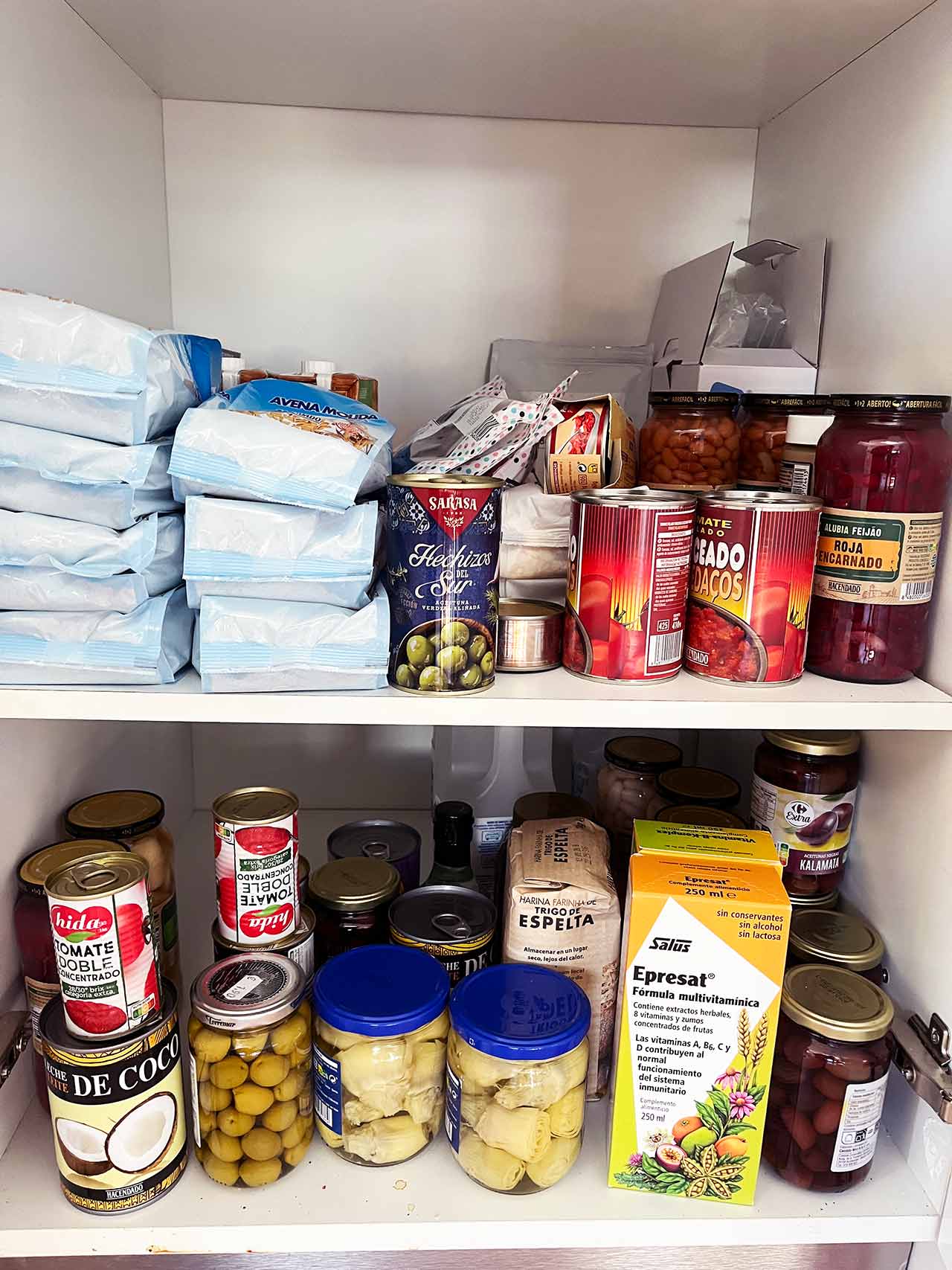
I thought moving to Europe would change what I ate. I did not expect it to change how I stock my pantry and kitchen. Between smaller storage, different product names, and a totally different shopping rhythm, my pantry got simpler, more practical, and honestly more aligned with the kind of healthy comfort food I love to cook.
Table of Contents
The Biggest Pantry Surprises After Moving To Europe
There were a few things I wasn’t expecting when I moved to Spain.
- How much less storage I would have. (Hello, micro kitchens!)
- How much that would streamline what I buy and keep on hand. (Goodbye, canned foods I forget I even have.)
- How much it would improve my cooking and what I eat. (Hello, easier meals!)
Smaller Kitchens Forced A “Use What You Have” Pantry
In the States (particularly during and after the lockdown), me and many of my fellow Americans really stocked up on stored foods, and those habits really stuck with me. When I tell you that going into my own pantry was always a surprise shopping trip, it’s not an understatement. All I knew was that I had food. But I couldn’t tell you much of what was in there or even how much.
Was I as prepared as I could be for a disaster? Maybe. Was I unorganized at best? Absolutely. And that overstock of food was more detrimental to my eating and cooking habits than I realized.
In Spain, Grocery Shopping Became More Frequent And More Flexible
While the local donation center loved me dearly just before I moved to Spain, I felt surprisingly free after getting rid of so much stuff (both food and non-food items). We don’t always realize how having so much stuff can literally and figuratively weigh us down.
When I got to Spain, I was greeted with much less storage space. In fact, I had about a quarter of it to work with, if that. So my shopping became streamlined and focused. Stocking up became more of a game of what I could fit into my cabinets than what I really wanted to stock up on.
But a funny thing happened in the process. If you asked me now if I could survive another lockdown with what’s in my pantry, not only would I answer a resounding yes, but I could also tell you exactly what’s in my pantry without looking.
This, in turn, had a rather surprising effect on my cooking. Planning meals and grocery shopping became so much easier. I knew exactly what I had on hand. No old cans with questionable expiration dates. No mystery packages on the back shelf (I no longer have a back shelf!). It’s just a clean list of healthy ingredients that I love having on hand for making a multitude of meals.
Why My Shopping Rhythm Changed
Yes, my access to fresh fruits and veggies improved when I moved to Spain. They are in very affordable abundance here. But what also changed is the frequency of my shopping trips as well as what and how much I buy.
Don’t get me wrong, I could have done this in the States, too. But firstly, it never would have occurred to me. Second, that’s just not the way most people function in the States.
So what changed? I often go to the weekly open markets here. I’m a bit limited due to the distance from where I live, but I do make it a point to go as often as I can. And when I do, the focus is solely on fresh produce because there is literally nothing else to buy.
- There are no grocery checkout counters taunting me with last-minute impulse purchases. It’s just me and the local growers.
- When I do go to grocery stores (we have Carrefour and Mercadona here that are similar to Safeway, Kroger, or Lyons), the meat counters, fish counters, and produce sections are some of the most bustling areas of the store. I love to get swept up in the motion of it all. Shopping is a real experience here, and I adore it. Plus, it keeps me focused.

The European “Buy Less, Buy Fresher” Pattern
It’s true, Europeans shop more frequently. They don’t stock up at Costco with massive amounts of things the way Americans do. They shop for smaller amounts of things that they can eat fresh.
And yes, they stock up on pantry essentials as well. But when they do, it isn’t 20 cans of tuna that were on sale and will last for the next 20 years. It’s a package of dry beans, 3 small cans of tuna (they are only about 2-3 ounces), maybe a jar or two of canned veggies (which are shockingly delicious here… nothing at all like the bland, canned veggies in the States!), and a package of some sort of grain like rice or quinoa.
How Markets And Neighborhood Stores Changed What I Keep On Hand
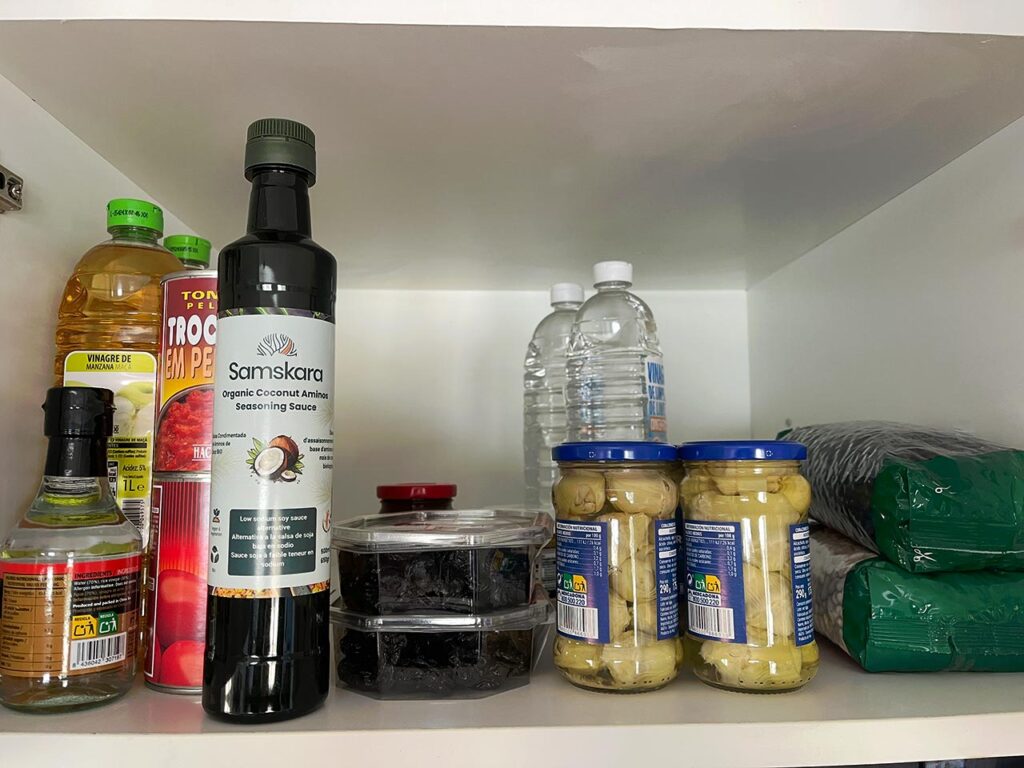
The truth is, my eating has changed overall. So it makes sense that my pantry would also change. That said, I’m not sure which came first. The change in eating or the change in buying. What’s different now is that I don’t load up on boxes of pasta (I almost never eat it anymore), I have a small package of rice, and lots of dry beans. I have a few bags of quinoa, and several jars of artichoke hearts, diced tomatoes, jarred beans (they don’t often come in cans here), and lots of packages of oats, which I use often for various things.
What I Stopped Buying
While I’ve always shopped as a clean eater, I stopped buying anything that I knew would sit in my pantry for too long. As I said before, the pasta is gone, the large packages of rice are gone, the endless cans of beans are now jars in smaller quantities, and I purchase jarred/canned vegetables in larger quantities that I rarely used to buy in the States. Things like artichoke hearts are now a staple in my diet, not an occasional item to add to something just for a special recipe.
What I Buy More Of Now
I will say, the one thing that has not changed (and has actually gotten a bit worse) is my spice cabinet. No matter where I live, that will always be overflowing. I love my herbs and spices, and they are so flavorful and rich here that I just cannot help myself.
The Duplicates I Used To Buy “Just In Case”
My American pantry had endless bags of pasta and rice, and so many cans of beans that I question if I ever could have eaten them all, even with a hungry teen in the house. My dry bean rations are now far more manageable, so my beans never get so old that they have to cook for hours and hours to become tender.
My Go-To, Moving To Europe Pantry Staples List
Here’s what I typically keep on hand now.
Oils, Vinegars, And Everyday Flavor
- Extra virgin olive oil (gallon-size)
- A variety of vinegars
- Two types of mustard – Dijon and Yellow.
- Tomato paste
- Dried herbs and spices
Grains, Beans, And Meal Builders
- Oats,
- Brown rice
- Lentils
- Chickpeas
- Black beans
- Pinto beans
- White beans
Canned And Jarred Staples I Rely On
- Canned tomatoes (especially diced tomatoes for soups)
- Canned tuna
- An assortment of olives
- Artichokes
- Small cans of roasted peppers
Sweeteners And Dessert Pantry Basics
- Honey
- Maple syrup
- Xylitol (not clean eating, but better for my blood sugar)
- Unsweetened cocoa powder
Pantry Translation Cheat Sheet
| What I looked for in the US | What to look for in Spain | How I use it on GP |
|---|---|---|
| Old-fashioned oats | “copos de avena” or “avena” | Oatmeal, baked oats, cookies |
| Baking powder | “levadura química” | Cakes, muffins, cookies |
| Baking soda | “bicarbonato” | Cookies, quick breads |
| Maple syrup | “sirope de arce” | Desserts, breakfast |
European Food Labels
While labels can vary greatly from country to country, there are some basic things that really stand out here. Firstly, allergen labels are a huge deal here in most European countries. Second, several countries have a grading system that lets you know how healthy or bad for you a certain item is. It’s a great system. They don’t have it in Spain, but I’ve seen it in other countries, and I love it.
Basically, European labels, for the most part, take the guesswork out of what you are buying. You can buy with much more confidence here than you can in the States.
My Pantry Reset Plan For New Immigrants
If you are planning a move to Europe, here’s a simple checklist to help you set up your own European pantry.
Step 1: Cook For One Month Before Buying “Backup” Pantry Items
Do your shopping more frequently, and get a good handle on what it is you will be using regularly. This can take up to a full month because you will be learning new products in the process. Don’t stock up until you have done this.
Step 2: Pick 10 Staples You Will Actually Use
While you go through your first month of cooking, keep a written record of the pantry items you use most often. Once you have a list of ten items, you’ll have a much better plan for what to buy in bulk.
Step 3: Build One Default Breakfast, One Default Lunch, One Default Dinner
If you have these three recipe ingredients in constant supply, you’ll always have something you can make last-minute, or when the fridge is a bit bare.
Step 4: Add Dessert Staples Last So You Don’t Overbuy
These are things such as sweeteners, baking flours, and baking spices.
FAQs
What pantry staples should I buy first after moving to Europe?
Start with the basics. Garlic and onion powder, as well as salt and pepper. If you eat beans, grab a few packages or jars of the ones you like best, and don’t forget to grab a few jars of canned veggies. They can save you in a pinch. Lastly, things like quinoa and brown rice are always great to have on hand.
What US pantry items are hardest to replace in Europe?
Chili powder (the type you use in Mexican food), red pepper flakes, and ground rosemary. It’s not that they are impossible to get here, but they can absolutely be difficult to locate.
What are the best European pantry staples for healthy comfort food desserts?
Natural sweeteners are a great place to start. The move on to some whole grain flours.
How do I keep pantry spending under control in a new country?
The truth is, there just isn’t enough room to buy/store more. So that helps. But also, mainstreaming what I keep on hand has really helped keep the spending under control.
Further Reading